Utah Estate Plans


Personalized Estate Planning You Can Trust


Two prospective clients


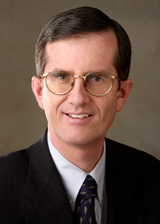
        Welcome to my website, Utah Estate Plans.  For over 15 years, I have helped individuals, couples, and families with their estate and business planning.  I use a unique, client-centered process and team approach that results in an estate plan highly personalized to your needs.

        I am committed to providing estate planning counseling and services that make a real difference in the lives of my clients.   If you would like to meet with me to discuss your planning, I invite you to schedule a preliminary consultation at no cost or obligation by calling 801-530-7359 or by emailing me at mjmorrise@cnmlaw.com.    - Mark J. Morrise -

Go to Main Index  


My Story


The Planning Process

      Overview  ·  Team Approach   ·  Comprehensive Interview  ·  Identify Objectives and Solutions  ·  Plan Design and Creation  ·  Fee Quote

My Professional Qualifications

     Summary  ·  Education  ·  Employment  ·  Experience  ·  Seminars  ·  Publications  ·  Leadership  ·  Memberships  ·  Awards and Distinctions

Frequently Asked Questions

     "What Is Estate Planning?"  ·  "Which Is Better, a Will or a Trust?"  ·  "How Much Does Estate Planning Cost?"  ·  "Do I Really Need an Estate Plan?"

Estate Planning Glossary

     Topic title  ·  First letter index:  A · B · C · D · E · F · G · H · I · J · K · L · M · N · O · P · Q · R · S · T · U · V · W · X · Y · Z

Additional Information

     Links to Related Sites   ·  About the Author


MY STORY

          I became a lawyer because I wanted to make a difference in the world, to make a real contribution to the clients I serve.  For several years I practiced general civil law, including some estate planning, and became a partner in a prominent Salt Lake City law firm.

          Although I enjoyed the areas of law in which I practiced, I sensed something was missing.  In most areas of my practice, I didn’t feel like I was making a real difference in my clients' lives.  The one exception was estate planning.

          I had invested many years into developing the other areas of my law practice, and at first I was reluctant to give them up.  The day came, however, that I decided to let them go and limit my practice to estate planning.  This was the best decision I’ve ever made.

          Today I have a full-time estate planning practice that focuses on creating personalized estate plans that are of real benefit to my clients and their heirs.   My practice also extends to legacy planning, which integrates traditional estate planning with preserving personal and family memories, passing on values and life lessons, and assisting survivors after a loved one's passing.

          For clients who ask for it, I also prepare simple, fill-in-the-blank estate plans at a reduced cost.

          If you are interested in discussing your estate planning needs with me, or would just like to meet with me to see if I am the kind of lawyer you’d like to work with, please feel free to schedule an appointment by calling 801-530-7359 or emailing me at mjmorrise@cnmlaw.com.

Return to Main Index

THE PLANNING PROCESS

Overview of the Planning Process

          Sometimes people avoid planning their estate because they don’t know what to expect.  But the planning process is nothing to worry about or fear.  After completing his estate plan, one of my clients recently commented, “That was much easier than I thought it would be.  It didn’t hurt a bit.”

          I use a unique, client-centered process for planning estates that consists of four steps:
  1. I conduct a Comprehensive Planning Interview in which you do most of the talking, and I listen.
  2. I help you identify your Planning Objectives, and then I propose Planning Solutions.
  3. We design your plan together.
  4. When you are satisfied with your plan design, I create your plan and help you implement it.
          The goal of this process is to develop an estate plan that meets your needs and with which you are completely satisfied.  Although there are other planning methods that require less effort or cost, this is the best method I have ever used or seen at creating personalized estate plans that are of real worth to my clients.

          This process is not overly time consuming.  Most of my clients complete it in less than four hours.  Many people spend more time than that planning a two-week vacation.

Return to Main Index

Team Approach

          Most lawyers use a “doctor-patient” approach to estate planning.  You (the “patient") talk about your planning concerns and needs, and then the lawyer (the “doctor”) will “prescribe” a plan he or she believes is right for you.

          Unlike most other lawyers, I use a “team” approach to estate planning.  Your role on our team is to teach me about you and your family.  My role is to teach you about applicable estate planning concepts.  When you and I have both learned what we need to know, then we can design your plan together.

          My clients say that they like the team approach because it makes them feel more a part of the planning process.  I like it because in my experience I can design a better plan, one that will be of real benefit to you and your heirs, with your participation than without it.

Return to Main Index

Comprehensive Planning Interview

          If you come to see me about planning your estate, I will begin our first meeting with a Comprehensive Planning Interview, during which you will be given an opportunity to:
  • Share your concerns, fears, hopes, dreams, values, and goals
  • Teach me about you and your loved ones
  • Review your existing estate plan
  • Learn about applicable estate planning concepts
  • Identify your specific estate planning problems and objectives
  • Hear a proposed solution for each problem and objective
          In this interview, the most important thing I ever do is to intently listen -- to your concerns, fears, hopes, dreams, etc. and the other critical information you provide, which will become the foundation for your estate plan.

          Because our time is valuable, in this interview I will not ask you for personal information (such as your home address, contact information, marital status, children’s names and ages, etc.).  Instead, a member of my staff will call you for this information before our meeting so that I can bring it with me to our meeting.

Return to Main Index

Identify Objectives and Solutions

          The result of the Comprehensive Planning Interview is the creation of a list of your Planning Objectives.  Examples of possible Planning Objectives include:

          “Avoid probate”
          “Minimize estate and related taxes”
          “Promote family harmony / avoid family disputes over the estate”
          “Protect children from being disinherited if the surviving spouse remarries”
          “Protect child’s inheritance until he or she is financially mature”
          “Protect child’s inheritance from divorcing spouses and creditors”

          The above list is just an example.  Your list of Planning Objectives will be unique to your situation and may be shorter or longer than the above list.

          For each of your Planning Objectives, I will propose a Planning Solution, which usually will include an example or story of how that Solution will work.  For example, if one of your Planning Objectives was to protect your child’s inheritance until he or she is financially mature, a Planning Solution that I might offer would be to create a Financial Responsibility Trust for your child, in which a carefully chosen Trustee would mentor your child until he or she demonstrates sufficient financial maturity to be given control over the trust assets.

Return to Main Index

Plan Design and Creation

          The last phases of the estate planning process are the plan design, creation, and implementation.

          Plan design – My clients’ estate plans are “designed” on an erasable wallboard.  A diagram is drawn of a customized estate plan that addresses your concerns, fears, hopes, dreams, values, and goals and that accomplishes your Planning Objectives.  Although I will begin this diagram, as we go along I will ask you what you do and don’t like about it and will revise it accordingly.  Also, I will invite you to draw your own ideas on the wallboard.

          As the plan is designed, I will explain its Rewards (benefits), such as survivor support, property protection, and tax savings; its Risks, if any; and its Requirements, such as the need to fund a trust.

          Plan creation – If you approve the plan design and hire me to complete it, then after our meeting I will create personalized plan documents (such as customized Wills, Trusts, Powers of Attorney, Advance Health Care Directives, etc.) and any other necessary plan items.

          Plan implementation – The final step of the planning process is plan implementation, which of course includes signing the plan documents.  Depending on the plan design, implementation may also include funding trusts or other plan entities, re-titling property, changing beneficiary designations, and other tasks.  A list of implementation tasks will be given to you, and my staff with assist you in completing these tasks.

Return to Main Index

Risk-Free Fee Quote

          Early in our first meeting, when I get an idea of what your estate planning needs are, I will quote you a range of what my fees will be to design, create and implement your plan.  If you feel comfortable with the fee range, our meeting will proceed.

          Once your Planning Objectives have been identified and Planning Solutions have been proposed that are acceptable to you, I will give you a Risk-Free Fee Quote of the cost to design, create, and implement a plan that accomplishes your Planning Objectives.  At that point, you may decide to not hire me and our meeting will end with no cost or obligation to you.  On the other hand, if you are comfortable with the quoted fee, you can decide to continue to the plan design step.  If you decide to continue, then I will request a retainer equal to 50% of the quoted fee to be paid at the close of the meeting.

Return to Main Index

MY PROFESSIONAL QUALIFICATIONS

Summary of Professional Qualifications

          Sometimes people want to see my professional qualifications to decide if I am competent to plan their estate. To this end, here is a summary of those qualifications:
  • Education.  I received my law degree from the J. Reuben Clark Law School at Brigham Young University in 1981.
  • Experience.  I have over 15 years experience in all areas of estate planning, including Wills and living trusts, disability and end-of-life planning, spendthrift and special needs trusts, tax planning, wealth preservation, asset protection planning, business planning, and probate, estate, and trust administration.
  • Seminars.  In the last five years, I have spoken at over 30 estate planning seminars.
  • Publications.  I have published several articles on estate planning and am the author of two estate planning websites.
  • Leadership.  I have served as the chair of the Estate Planning Section of the Utah State Bar and am currently a board member in the Utah Chapter of the Society of Financial Service Professionals.
  • Memberships.  I am a member of several organizations for estate planning professionals.
  • Awards and Distinctions.  In 2004, I was elected a fellow in the American College of Trust and Estate Counsel, one of the most prestigious professional organizations for estate planning lawyers in the United States.  In 2008, I received a distinguished service award from the Utah State Bar for my instrumental role in bringing the Wills for Heroes program to Utah.
          You can see the detail of the foregoing qualifications by clicking on its title.  The detail begins immediately after "Frequently Asked Questions" at "My Professional Qualifications (continued)."

Return to Main Index

FREQUENTLY ASKED QUESTIONS

"What Is Estate Planning?"

          I think of "estate planning" as planning for you and your family's greatest need.  This includes not only planning for what happens to your property after death, but also planning for emergencies during your lifetime.  A practical definition of estate planning that I often use with my clients is:

"I want to control my property while I'm alive,

take care of me and my loved ones if I become disabled,

and give what I have to whom I want,
the way I want,
and when I want.

at the lowest cost and with the greatest tax savings possible."

Return to Main Index

"Which Is Better, a Will or a Trust?"

          To decide which is better for you, a Will or a trust, you will want to first identify your Planning Objectives.  For example, if your objectives are to:
  • Name guardians for children under 18
  • Protect your child's inheritance until he or she is financially mature
  • Minimize estate costs before death
you could accomplish all of those objectives with a Will.  On the other hand, if your objectives are to:
  • Create an organized list of your major assets, which will be part of your estate plan
  • Receive immediate assistance with your finances if your health ever fails or you ever become incapacitated
  • Simplify the task of settling your estate for your survivors
  • Shield your heirs from publicity over your estate
  • Avoid probate
then you will need to set up a revocable living trust to accomplish your objectives.

Return to Main Index

"How Much Does Estate Planning Cost?"

          Paying for an estate plan is in some ways like buying a used car.  There is an upfront cost (like what you initially pay for the car) but there can also be a hidden cost (like the cost of repairs when the car breaks down).  Just as the repair costs for a used car can exceed its initial purchase price, so also can the hidden costs of an estate plan exceed its upfront cost.

          Upfront cost.  The upfront cost of estate planning varies widely.  If you prepare your own estate plan, then the cost can be as low as $100 to $200 to purchase do-it-yourself estate planning documents or software.

          If you have someone else prepare your estate plan, you might pay anywhere from about $200 to $1,000 for a simple, fill-in-the-blank estate plan.  This type of plan will provide some protection but may not help much in circumstances that are unique.  For example, if you are in a second marriage, a fill-in-the-blank plan may do nothing to avoid a dispute between your surviving spouse and children from your first marriage over what happens to the family home.

          For a personalized estate plan, the cost could range anywhere from about $1,000 to $3,000 for a plan with no tax planning, and from about $2,000 to $10,000 for a plan that includes tax planning.

          Hidden monetary costs.  An estate plan can have two types of hidden costs.  The first is monetary.  For modest estates, the highest hidden monetary cost is usually the litigation costs incurred by survivors fighting over the estate.  Litigation costs vary widely, from about $1,000 for a simple case that settles to over $10,000 for a difficult case that doesn't.

          For large estates, the highest hidden monetary cost is usually taxes.  For example, in 2008 a $3 million estate could be subject to as much as $450,000 in federal estate taxes.

          Examples of other hidden monetary costs include the expense of probating the estate, or the financial loss incurred by an heir who is unintentionally disinherited or who loses a portion of his or her inheritance to frivolous spending, a divorcing spouse, or an unforseen creditor.

          A good estate plan will protect against these hidden monetary costs.  For example, with proper planning the $450,000 estate tax mentioned above can be reduced to zero.

          Hidden non-monetary costs.  The second type of hidden cost of an estate plan is non-monetary, such as the hard feelings, resentment, bitterness, or hatred experienced by an heir who feels unfairly treated or who feuds with the other heirs.  These emotional "costs" can develop in a variety of circumstances, such as when:
  • A parent loans money to one child but not to the other children, and the loan is never repaid
  • A child makes personal and financial sacrifices to care for an aging parent, and none of the other children provide or even offer any help
  • A surviving spouse is a second marriage needs to continue living in the marital home, despite objections by the children from the deceased spouse's first marriage
          A well-designed estate plan will also protect against these and other hidden non-monetary costs.

Return to Main Index

"Do I Really Need an Estate Plan?"

          Whether you really need an estate plan depends entirely on your situation.  You may be young, middle-aged, or elderly; be single or married; be in good or poor health; have children or be childless; be working or retired; or have modest or sizeable financial assets.  Each of these facts, and many others, will affect your need for an estate plan.

          Although I work as an estate planning lawyer, let me be the first to admit that for certain people having an estate plan may make little if any real difference.  For example, consider a married couple, neither of whom has children from a prior marriage, who want to leave their property to each other and then to their children in equal shares.  Even without a Will or a trust, their property will be distributed as they desire because of the laws of inheritance.

          However, having an estate plan would make a difference if the situation described above includes additional relevant circumstances.  For example, having an estate plan would matter if:
  • The couple has minor children
  • The couple has children or other heirs who are not financially mature
  • The couple has a child with special needs
  • Either spouse has children from a prior marriage
  • The couple has a prenuptial agreement
  • The couple wants to promote family harmony and avoid family disputes over their estate
  • The couple has personal possessions of emotional value they want to pass on
  • The couple wants to avoid probate on the death of the second spouse
  • The couple has a taxable estate that exceeds the current federal estate tax exemption.
  • Either spouse expects to receive an inheritance that will increase the couple's taxable estate to exceed the federal estate tax exemption
  • Either spouse is a business owner
  • The couple wants to protect their assets
  • The couple wants to protect their children's inheritance from divorcing spouses or creditors
  • Either spouse becomes incapacitated before their death
  • The couple wants to plan for Medicaid
          These are examples of just some of the circumstances in which having an estate plan can really matter in your life or the lives of your heirs.

Return to Main Index


MY PROFESSIONAL QUALIFICATIONS (continued)

Education

  • J. Reuben Clark School of Law, 1981
  • Articles Editor, BYU Law Review
  • Brigham Young University B.S., Statistics, magna cum laude, 1978
  • Honor Program graduate, high honors; Pi Mu Epsilon, member
Return to Summary of Professional Qualifications
Return to Main Index

Employment

  • Shareholder, Callister Nebeker & McCullough (2002 – present)
  • Shareholder, Suitter Axland (1999 - 2002)
  • Associate, Corbridge Baird & Christensen (1985 - 1999)
Return to Summary of Professional Qualifications
Return to Main Index

Experience

  • Wills and Living Trusts
  • Disability and end-of-life planning
    • Financial and Medical Powers of Attorney
    • Advance Health Care Directives
    • Guardianships and conservatorships
  • Spendthrift and special needs trusts
  • Planning to reduce gift, estate, and generation-skipping transfer taxes
    • Irrevocable life insurance trusts
    • Dynasty trusts
    • Sales to grantor trusts
    • Grantor-retained annuity trusts
    • Private foundations
  • Wealth preservation and asset protection planning
    • Business entity protection
    • Domestic asset protection trusts
  • Business planning
    • Buy-sell agreements
    • Formation and maintenance of corporations, limited liability companies, limited partnerships
    • Business succession planning
  • Probate, estate, and trust administration
    • Small estates
    • Informal and formal probates
    • Determination of heirs
    • Affidavits of domiciliary foreign personal representative
Return to Summary of Professional Qualifications
Return to Main Index

Seminars


          I have made the following seminar speeches and presentations.  All seminars were held in Salt Lake City, Utah unless otherwise noted.
    2008
  • “Corporations, Family Limited Partnerships and Limited Liability Companies” and “Putting It All Together – A Hypothetical Case,” Advanced Asset Protection Strategies, National Business Institute (28 Apr 2008)
  • “Types of Trusts” and “Taxation of Trusts,” Trust Administration, Lorman Education Services (18 Mar 2008)
  • “Utah’s New Advance Health Care Directive Form,” Advance Health Care Directives, Utah State Bar Spring Convention (14 Mar 2008 – St. George, Utah)
  • “Basic Tax Considerations – What You Need to Know to Choose the Appropriate Plan” and “Ethics and Estate Planning,” Drafting Effective Wills and Trusts, National Business Institute (6 Mar 2008)
  • “Manage the Decisions Involved in Post-Mortem Planning” and “Make Ethical Decisions in Estate Planning,” Minimizing Client Estate Taxes with Plans That Work, National Business Institute (19 Feb 2008)
  • “Planning with Zeroed-Out GRATs,” presentation to Utah ACTEC Fellows (13 February 2008)
  • “Utah’s New Advance Health Care Directive Form,” Advance Health Care Directives, Estate Planning Section, Utah State Bar (8 Jan 2008)
    2007
  • “Closing the Estate" and "Ethics in Probate Practice," Probate Practice: The Essential Basics, National Business Institute (20 Dec 2007)
  • “Plan for Your Client's Incapacity” and “Give Informed Advice About Long-Term Care,” Estate Planning and Recovery for Elderly Clients, National Business Institute (10 Dec 2007)
  • “Plan for Your Client's Incapacity” and “Give Informed Advice About Long-Term Care,” Estate Planning and Recovery for Elderly Clients, National Business Institute (10 Dec 2007)
  • Estate Planning Basics, National Business Institute (26 Nov 2007)
  • "Practical Estate Planning Solutions fo Lawyers and Their Families," presentation the Utah Attorneys General (8 Nov 2007)
  • “How to Plan for Incapacity” and “Understanding Long-Term Care Options,” Estate Financial, and Health Care Planning for the Elderly, National Business Institute (28 Sep 2007)
  • “Business Entities as a Viable Asset Protection Option,” Demystifynig Asset Protection Vehicles, National Business Institute (14 Aug 2007)
  • “Recognizing Different Types of Trusts” and “Successfully Navigating the Tax Aspects of Trusts,” Strategies for Proper Trust Creation, National Business Institute (25 Jul 2007)
  • “Sale to a Grantor Trust and Variations” and “The Zeroed-Out GRAT,” The 8 Greatest Estate Planning Techniques in Utah, Lorman Education Services (11 Jul 2007)
  • “Basic Tax Considerations – What You Need to Know to Choose the Appropriate Plan” and “Ethics and Estate Planning,” Drafting Effective Wills and Trusts, National Business Institute (13 Mar 2007)
  • “Closing the Estate” and “Ethical Issues in Probate Practice,” Fundamental Probate Procedures and Practice, National Business Institute (26 Feb 2007)
    2006
  • “What to Do When a Spouse Is Confronting Health Issues – The Estate Plan,” and “Insurance to Fund All or Part of Long-Term Care Costs,” Resolving Legal and Financial Issues in Elder Care, National Business Institute (14 Dec 2006)
  • “Sale to a Grantor Trust and Variations” and “The Zeroed-Out GRAT,” The 8 Greatest Estate Planning Techniques in Utah, Lorman Education Services (13 Jul 2006)
  • “Preserving Wealth with Irrevocable Trusts,” “Asset-Freezing Techniques Using Irrevocable Trusts,” and “Value-Based Estate Planning,” All-Star Views on Estate Planning in Utah, Lorman Education Services (26 Apr 2006)
Return to Summary of Professional Qualifications
Return to Main Index

Publications

Return to Summary of Professional Qualifications
Return to Main Index

Leadership

  • Board Member, Utah Chapter of Financial Service Professionals (2008)
  • Chair, Estate Planning Section of Utah State Bar (2002 - 2003)
Return to Summary of Professional Qualifications
Return to Main Index

Memberships

  • Estate Planning Section of Utah State Bar (1992 - present)
  • Salt Lake Estate Planning Council (1993 - present)
  • Society of Financial Service Professionals (2003 - present)
Return to Summary of Professional Qualifications
Return to Main Index

Awards and Distinctions

Return to Summary of Professional Qualifications
Return to Main Index

Estate Planning Glossary

        To find an estate planning term, click on the first letter of that term in the list below.  All definitions are based on either Utah or federal law.  No attempt has been made to include state law definitions from jurisdictions outside of Utah.

        A · B · C · D · E · F · G · H · I · J · K · L · M · N · O · P · Q · R · S · T · U · V · W · X · Y · Z

Return to Main Index
A
Advance Health Care Directive - Also known as a "living will" or "medical directive," in this document a declarant (1) names an agent to make health care decisions on behalf of the declarant if he or she ever loses the capacity to do so and (2) directs under what conditions life-sustaining procedures should be withdrawn.

E
Estate - Property owned by a person at death.

Estate Tax - A federal tax paid by a decedent's estate on the amount by which the estate's value exceeds the applicable estate tax exemption.  In 2008, the estate tax rate is 45%.  A similar tax can also be imposed on a state level.

Estate Tax Exemption  An amount which an estate's value must exceed before an estate tax is due.  For example, in 2008 the federal estate tax exemption is $2,000,000.

F
Financial Power of Attorney - names an agent to manage a person's finances; usually grants the agent power to do anything the person could do with respect to the person's finances.  It may take effect immediately or when the person is unable to manage their own finances because of disability or incapacity.  It is also called a "Durable Power of Attorney" because it remains effective if the person granting the power is disabled or incapacitated.

G
Generation Skipping Transfer (GST) Tax - a federal tax which, subject to certain exceptions, is assessed when a person gives property, either in life or at death, to a descendant other than the person's children, or to anyone more than one generation younger than the person making the gift.  In 2008, the tax equals 45% of the value of the property given and is paid by the gift recipient.

Generation Skipping Transfer (GST) Tax Exemption - an amount which, if allocated to a generation skipping transfer, exempts the gift recipient from paying GST Tax.  The GST Tax exemption amount may be allocated to a single gift or cumulated through successive gifts.

Gift Tax - a tax paid by the recipient of a lifetime gift.  Federal gift tax does not apply to gifts less than the annual exclusion amount, which in 2008 is $12,000.

I
Irrevocable Trust - a trust that cannot be amended or revoked by the trustmaker.

L
Living (Inter Vivos) Trust - A trust that takes effect during the trustmaker's lifetime.

Living Will - See Advance Health Care Directive.

M
Medical Power of Attorney - See Advance Health Care Directive.

P
Pourover Will - A will that sends the willmaker's property to the willmaker's trust.

Probate - The legal process by which a decedent's property is collected and preserved; the decedent's debts and taxes are paid; and the remaining property is distributed according to the decedent's will or, if the decedent had no will, according to the laws of inheritance.

Probate Estate - Property owned by a willmaker that is governed by the will; excludes property that passes outside the will, such as jointly owned property, life insurance, and retirement accounts.

R
Revocable Trust - A living trust that can be amended or revoked by the trustmaker.

 
T
Taxable Estate - property of a decedent that is subject to estate tax; includes property either owned or controlled by a decedent at death.

Testamentary Trust - A trust that takes effect on the trustmaker's death.

Trust - An enforceable agreement in which a trustee holds and manages property for the benefit of the trust beneficiaries; governs final distribution of the trust property; names an initial and successor trustees.

W
Will - Takes effect at death; governs distribution of property in the willmaker's probate estate; names an executor to be in charge of the estate; can also name guardians for minor children.

Return to Main Index

Links to Related Sites

       Utah Probate Solutions
       Estate Planning Section of the Utah State Bar

Return to Main Index

About the Author

        Mark J. Morrise, the author of Utah Estate Plans, is a shareholder with the Salt Lake City, Utah law firm of Callister Nebeker & McCullough, where his law practice focuses on estate and business planning.  To see Mr. Morrise's firm resume, click here.

        Mr. Morrise can be reached by telephone at (801) 530-7359 or by e-mail at mjmorrise@cnmlaw.com.

        A 1981 graduate of the J. Reuben Clark Law School, Mr. Morrise has an AV rating from Martindale Hubbell, is a past chair of the Estate Planning Section of the Utah State Bar, and is an active member of the Salt Lake Estate Planning Council.  He has spoken to professional groups on trust-and-estate related topics.

Return to Main Index


This document is designed to provide an accurate general overview with regard to the subject
matter covered.  It is published with the understanding that the author and publisher are not
engaged in rendering legal, accounting, or other professional service.  If legal advice or other
expert assistance is required, the services of a competent professional should be sought.

Copyright (c) 2004, 2008 by Mark J. Morrise, All rights reserved.